
"coffee production Haiti"
800 article(s) found

Introduction to the flavor and taste characteristics of boutique coffee beans in Dominica coffee producing areas
After Santo Domingo returned to Spanish rule, the local people gradually formed a consensus on independent statehood. On November 30th, 1821, the former Governor of Santo Domingo, General Jos Nez de Cceres, proclaimed the founding of the country, named Haiti, Spain, and expected to merge under the Greater Colombian State led by President Bolivar of South America. [3] but in February 1822, nine weeks later, Haiti's
Introduction to the description of Flavor of Fine Coffee Bean Manor in Dominica Coffee Variety producing area
In 1677, about 4,000 French lived in 11 villages in the west of the island. In 1697, France and Spain ceded the western part of the island to France according to the Leswick Treaty of the Alliance War, formally recognizing French sovereignty over Haiti in the western part of the Spanish island, and the eastern part of the Spanish island was called East Santo Domingo. France continues to develop its agricultural economy on the island of Hispaniola.

Introduction to the variety and flavor of the fresh, elegant and full-grained coffee manor in Dominica
After Santo Domingo returned to Spanish rule, the local people gradually formed a consensus on independent statehood. On November 30th, 1821, the former Governor of Santo Domingo, General Jos Nez de Cceres, proclaimed the founding of the country, named Haiti, Spain, and expected to merge under the Greater Colombian State led by President Bolivar of South America. [3] but in February 1822, nine weeks later, Haiti's
Fresh and elegant Dominica Santo Domingo Coffee Flavor taste Manor characteristics of boutique coffee
In 1795, France and Spain signed the Basel Peace Treaty in Switzerland, agreeing to cede the Santo Domingo area in the eastern part of the island of Dominica to France, making the Spanish island a complete French colony. Six years later, Toussaint Lovidur, a black Haitian, led other black slaves to revolt against French rule and captured Santo Domingo in 1801.

Introduction to the characteristics of Dominica Santo Domingo coffee flavor varieties with light aroma
In 1677, about 4,000 French lived in 11 villages in the west of the island. In 1697, France and Spain ceded the western part of the island to France according to the Leswick Treaty of the Alliance War, formally recognizing French sovereignty over Haiti in the western part of the Spanish island, and the eastern part of the Spanish island was called East Santo Domingo. France continues to develop its agricultural economy on the island of Hispaniola.

Description of Dominica Coffee Manor Flavor with mellow taste introduction to the characteristics of planting environment
The Dominican Republic is located in the east of the island of Haiti in the West Indies, bordering the Republic of Haiti to the west, the Atlantic Ocean to the north and the Caribbean Sea to the south. With an area of about 49000 square kilometers and a population of 7.1 million, the Dominican Republic and the Republic of Haiti coexist on an island bordering Haiti. Like its neighbors, the Dominican Republic had a history of revolution and poverty, but now

Dominica coffee beans single bean flavor description characteristics planting information
Professional baristas please pay attention to the coffee workshop (Wechat official account cafe_style) Dominica coffee has two main characteristics, depending on the region and variety of production. Tibica coffee produced in Baraona, the main producing area, has the soft taste and light aroma peculiar to the Caribbean, while the highland coffee in Siwao in the central mountain area has a strong taste in each of the two producing areas.
Dominica Santo Domingo Coffee with rich flavor description, grinding degree, taste, fine coffee.
In 1677, about 4,000 French lived in 11 villages in the west of the island. In 1697, France and Spain ceded the western part of the island to France according to the Leswick Treaty of the Alliance War, formally recognizing French sovereignty over Haiti in the western part of the Spanish island, and the eastern part of the Spanish island was called East Santo Domingo. France continues to develop its agricultural economy on the island of Hispaniola.

Introduction to excellent Dominica Coffee Flavor description, Variety characteristics, Fine Coffee
The Republic of Dominica (Dominican Republic) is adjacent to Haiti, and both own the island of Hispaniola (Hispaniola). Like its neighbours, the Dominican Republic had a history of revolution and poverty, but now it has democratic elections and the country is relatively stable. In the early 18th century, coffee was grown in the Dominican Republic, the best production.
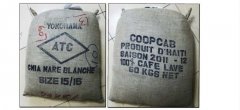
Boutique coffee beans Haitian boutique coffee Mare Blanche
The mention of Haiti has to remind people of the 2010 Haiti earthquake and the poverty and backwardness of the region, no one will remember Haitian coffee, because the local production conditions are extremely backward and the growth of coffee trees can only be achieved by the unique local climatic conditions, while Thio-tte Mare Blanche in southeastern Haiti has the unique climatic conditions for producing quality coffee. Mare
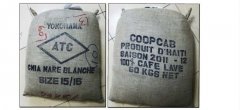
Haitian boutique coffee Mare Blanche
The mention of Haiti has to remind people of the 2010 Haiti earthquake and the poverty and backwardness of the region, no one will remember Haitian coffee, because the local production conditions are extremely backward and the growth of coffee trees can only be achieved by the unique local climatic conditions, while Thio-tte Mare Blanche in southeastern Haiti has the unique climatic conditions for producing quality coffee.

Introduction to the Brand of Grinding scale in Dominica Coffee Bean production area
Dominica is located on the island of Hispaniola in Central America, just above Martinique Island. Dominica occupies 2/3 of the right half of Hispaniola, while the other 1/3 to the west is the territory of Haiti. It is rich in natural resources, rich in coffee, cocoa, oranges, bananas and flowers. Coffee ranks among the country's gross domestic agricultural output in recent years.

What's the flavor of Dominica coffee, Caribbean red coffee? How about Dominican coffee?
For more information on coffee beans, please follow the Coffee Workshop (Wechat official account cafe_style) the Dominican Republic is located in the east of the Central Haitian Island in the West Indies, the Republic of Haiti is bordered by the Republic of Haiti to the west, the Atlantic Ocean to the north and the Caribbean Sea to the south. With an area of about 49000 square kilometers and a population of 7.1 million, the Dominican Republic and the Republic of Haiti coexist on an island, with the sea.

Introduction to the characteristics of Dominica Coffee Flavor and taste Manor
In 1677, about 4,000 French lived in 11 villages in the west of the island. In 1697, France and Spain ceded the western part of the island to France according to the Leswick Treaty of the Alliance War, formally recognizing French sovereignty over Haiti in the western part of the Spanish island, and the eastern part of the Spanish island was called East Santo Domingo. France continues to develop its agricultural economy on the island of Hispaniola.

Introduction to the flavor and taste of Dominica Santo Domingo coffee manor
In 1586, Captain Drake of England led a fleet to attack the city of Santo Domingo, but was repulsed by Spanish troops stationed there. Between 1605 and 1606, towns on the west coast of Hispaniola were often plundered by pirates, causing most of the local population to move inland. [3] at the beginning of the 17th century, French, Dutch and British pirates were operating in the west of Hispaniola, and France began to let farmers
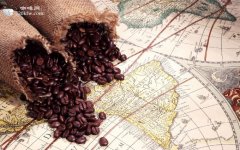
Haitian coffee beans from the world's boutique coffee production area
Despite well-known problems and fluctuating coffee quality from politically troubled lands, Haiti is still trying to produce some high-quality coffee. Most of the coffee produced in Haiti is grown in pure natural form, which is not intentional but the result of material shortage, because farmers are too poor to buy sterilization.
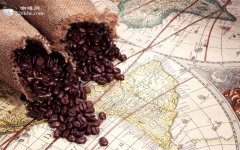
Haitian coffee beans from the world's boutique coffee production area
Despite well-known problems and fluctuating coffee quality from politically troubled lands, Haiti is still trying to produce some high-quality coffee. Most of the coffee produced in Haiti is grown in pure natural form, which is not intentional but the result of material shortage, because farmers are too poor to buy sterilization.

Introduction to the Flavor and Taste of High-quality Coffee in Dominica Coffee Manor
In 1677, about 4,000 French lived in 11 villages in the west of the island. In 1697, France and Spain ceded the western part of the island to France according to the Leswick Treaty of the Alliance War, formally recognizing French sovereignty over Haiti in the western part of the Spanish island, and the eastern part of the Spanish island was called East Santo Domingo. France continues to develop its agricultural economy on the island of Hispaniola.

CAFFE PASCUCCI achieves "the most ethical coffee brand in Europe"
As one of the most material-poor countries in the world, Haiti is a world-renowned producer of coffee beans. Most of the coffee produced in Haiti is grown in a purely natural state, which is not intentional but the result of material shortages. The reason is that coffee farmers are too poor to buy fungicides, insecticides and fertilizers. On the contrary, this makes coffee produced in Haiti the most natural.

A brief introduction to the origin, development, history and culture of Dominica boutique coffee beans with excellent acidity
The best place to produce is the Barahona region in the southwest, but Juncalito and Ocoa also produce a fine coffee, Santo Domingo coffee, which is characterized by freshness and elegance, fullness, excellent acidity and pleasant aroma, so it is worth it. Unlike coffee produced in Haiti, Dominica has a total of